










Getting wrong curtain measurements can leave you with curtains that fall short, drag on the floor, or fail to cover the window properly.
This guide shows you how to measure curtains for both ready-made and made-to-measure options. You will learn where to measure the width, how to find the correct drop, and how your curtain heading affects the starting point.
For accurate measurements, use the curtain pole or track as your reference point rather than measuring the window itself. The exact starting point varies by curtain style, which we explain in the steps below.
Quick Summary
To measure curtains, fit your pole or track first, measure its full usable width, and then measure the drop from the correct point for your chosen heading. Decide where you want the curtains to finish and check every figure twice before ordering, especially for made-to-measure curtains.
What Tools You Need to Measure Curtains
Accurate curtain measurements start with the right tools. The same is true when measuring the length and width of curtains. Without a reliable tape measure, you can easily record the wrong width or drop.
A measuring mistake means checking the window again, which could delay your order. Therefore, make sure you have the following items before you start looking at your windows:
Metal tape measure
Pencil or pen
Paper or notepad
Step ladder
Curtain pole or track measurements
Calculator
Spirit level
Note: A spirit level is an option here. We recommend using it if you don't have a second person to check that you're holding the measuring tape correctly.
What Are Curtain Width, Drop, and Fullness
Curtain measurements mainly come down to three terms. Width describes the horizontal space the curtains need to cover, while drop measures vertically from the hanging point to the chosen finishing point. On the other hand, fullness describes the extra fabric used across that width.
Here is a quick yet comprehensive overview of what they are and how they compare to each other:
How Do I Measure for Curtains? A Step-by-Step Overview
You can measure most curtains in four main steps. Start with the fitting, then work out the width and drop before choosing where the curtains should finish.
Step 1: Position Your Pole or Track (If Not Yet Fitted)
First of all, you need to fit your pole or track if you have not done it before. This is because you ultimately need a curtain that not only covers the window but also fills extra space around it. If it is a new fitting, we suggest following the guide that we usually recommend to our clients at the Curtain Store:
Position the pole or track around 15 to 20 cm above the window where the space allows.
Allow it to reach roughly 15 to 20 cm beyond each side of the window.
Make sure the fitting runs level before taking measurements.
Expert Tip: Please check for radiators beneath the window before choosing a final curtain length. The Energy Saving Trust advises keeping thick or thermally lined curtains from covering radiators. This is because fabric hanging over the heat source can restrict how effectively warmth enters the room.
Step 2: Measure the Curtain Width
Next, you need to measure the full usable width of the curtain pole or track. Do not simply measure the glass or window frame once the fitting is in place.
For a curtain pole, measure between the decorative finials. The finials sit outside the area where the curtain actually travels.
For a track, measure the complete track from one end to the other. If the track includes an overlapping centre section, include that overlap when following the instructions for your chosen curtain setup.
Write the width down immediately before moving on to the drop.
Step 3: Measure the Curtain Drop
Next, measure the curtain drop. Before you measure the drop, check your curtain heading. The heading determines where to start measuring.
For example:
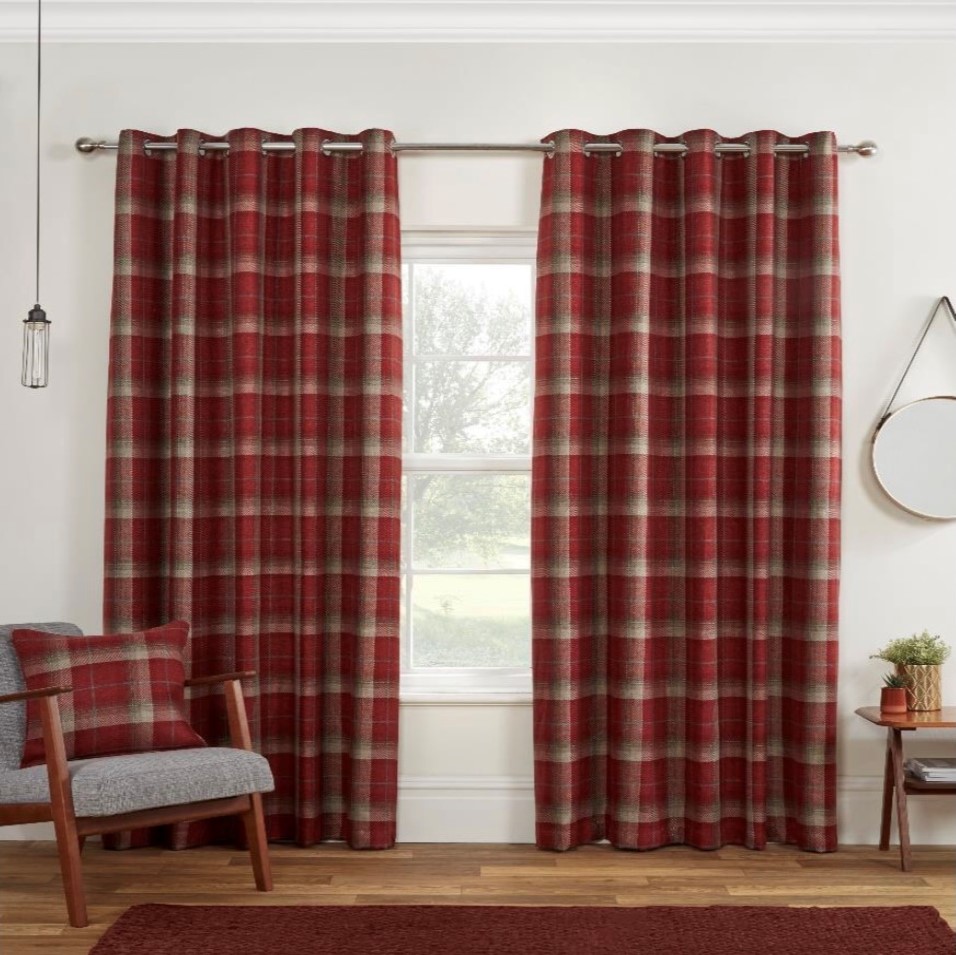
Eyelet curtains usually relate to the top of the pole.
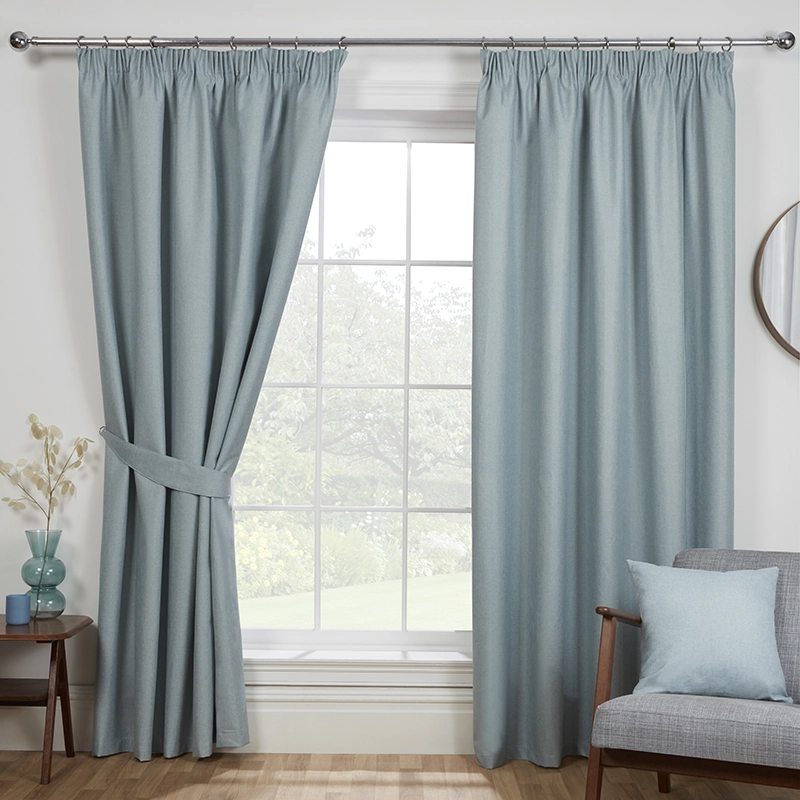
Pencil and pinch pleats hanging from a pole usually relate to the eye of the curtain ring.
Pleated curtains on a track may use the top of the track, so the finished curtain covers the fitting.
So, when taking measurements, measure vertically from the correct starting point to your preferred finish. Also, keep the tape straight while you work.
Step 4: Choose Your Curtain Length or Finish
The final measurement you need to take to order the right curtains is the length. But before recording the final drop, decide where the curtains should end. Most curtains use one of four common finishes:
Just above the windowsill
Below the windowsill
Just above the floor
Resting or puddling on the floor
How to Measure Curtain Width Correctly
Width sounds straightforward, but the fit depends on exactly where your tape starts and stops. So, you must work from the pole or track itself and keep decorative parts out of the measurement unless your track system specifically requires them. The method depends on whether you have a pole, a standard track, or a track with a centre overlap.
Width of a Curtain Pole
Extend the metal tape from one end of the pole to the other.
Measure the usable pole between the finials.
Leave both decorative finials out of the measurement.
Record the width clearly before taking the drop.
Quick Note: For made-to-measure curtains, give the pole width requested by the supplier. The maker can then calculate the fabric allowance and fullness required for the chosen heading.
Width of a Curtain Track
Place the tape at one end of the curtain track.
Follow the track across its full width.
Measure from end to end.
Write down the complete track measurement.
We recommend adding 3 cm to its standard track measurement for pencil pleat and pinch pleat curtains to allow the curtains to overlap when they meet in the centre.
Curtain Track With a Centre Overlap
If your track overlaps in the centre, measure the main track and the overlap separately.
Measure the main track from one outside end to the other.
Measure the overlapping section separately.
Add the overlap where your supplier's measuring instructions require it.
Record clearly that the figure relates to an overlapping track.
How to Measure Curtain Drop
Once you know the width, decide exactly where the bottom edge should finish. Where practical, take the drop at more than one point across the fitting. Your final drop depends on where you want the curtains to finish.
Sill-Length Curtains
Measure from the correct heading point towards the windowsill.
Stop slightly above the sill so the curtain does not rub against it.
The Curtain Store uses around 1 cm above the sill as its guide.
Repeat the measurement to confirm it.
Curtains Below the Sill
Start from the correct pole or track point.
Measure down past the windowsill.
Choose a finish that clears the sill cleanly.
Check for radiators or furniture before confirming the drop.
Floor-Length Curtains
Measure from the required heading point towards the floor.
Take measurements at more than one place across the window.
Choose a small clearance if you want the hem to hang clear of the floor.
Use the shortest suitable reading if the floor varies noticeably.
Floor-length curtains can also help with comfort around windows. In research on traditional timber sash windows, Historic England found that heavy curtains reduced measured whole-window heat loss by 41% in the test arrangement. The result applies to that particular traditional-window study, so it should not be treated as a universal percentage for every home.
Curtains That Puddle on the Floor
Puddling gives a softer, more decorative finish, although it requires more upkeep. It works better in low-traffic areas where the curtain is unlikely to pick up dirt, catch under furniture, or get moved frequently. You can measure such curtains as follows:
Measure normally from the correct hanging point to the floor.
Decide how much extra fabric you want resting on the floor.
Add that chosen amount to the finished drop.
Check that the room suits fabric touching the floor.
Common Curtain Measuring Mistakes to Avoid
Even with the right tools, small measuring mistakes can affect the finished fit. Sometimes, you might start from the wrong reference point. As a result, your measurements have significant differences despite you having the best measuring equipment.
Before you place an order, check that you have avoided these common measuring mistakes:
Measuring the window instead of the pole or track
Measuring the drop from the wrong point
Forgetting the curtain heading style
Making your own deductions too early
Assuming every window in the room is the same size
Summing It Up
To put it briefly, good curtain measurements start with the fitting, not the fabric. So, put the pole or track in place first and measure its usable width. Then, find the correct starting point for your chosen heading. Finally, work down to the finish you want.
Once you have measured your curtains accurately, browse our collection of made-to-measure curtains for a custom fit. If you prefer trending designs, we also offer ready-made curtains at The Curtain Store.
You can also order up to five free fabric samples before choosing your material, which lets you check the colour and texture in your own room before placing a bespoke order.
FAQs
What if I don't have a curtain pole or track fitted yet?
Fit the pole or track first, since every measurement in this guide depends on its exact position. Mount it, then measure the width and drop directly from that fixed point.
How much wider should my curtains be than my window?
Curtains usually need to be at least 1.5 to 2 times the width of your window's pole or track, depending on heading style, so they gather into proper folds once closed.
Can I cut curtains down if they're too long?
Shortening curtains at the hem is usually straightforward and generally safer than risking a drop that comes in too short, since there is no way to add length back on afterward.
What's the real difference between ready-made and made-to-measure sizing?
Ready-made curtains come in fixed standard sizes you match your measurements against, while made-to-measure curtains get manufactured to your exact figures, with far less compromise on fit.
Should I measure in centimetres or inches?
Centimetres give more precise results for UK suppliers, since most retailers, including ours, list products in metric sizing. Round to the nearest millimetre for the most accurate figure.
.svg)